Search is evolving rapidly. Traditional Search Engine Optimization (SEO) focused on ranking web pages in search engine result pages (SERPs). However, the rise of AI-powered search experiences has changed how users discover information online. Instead of clicking links, users now receive direct answers from AI systems such as Bing Copilot and conversational search interfaces.
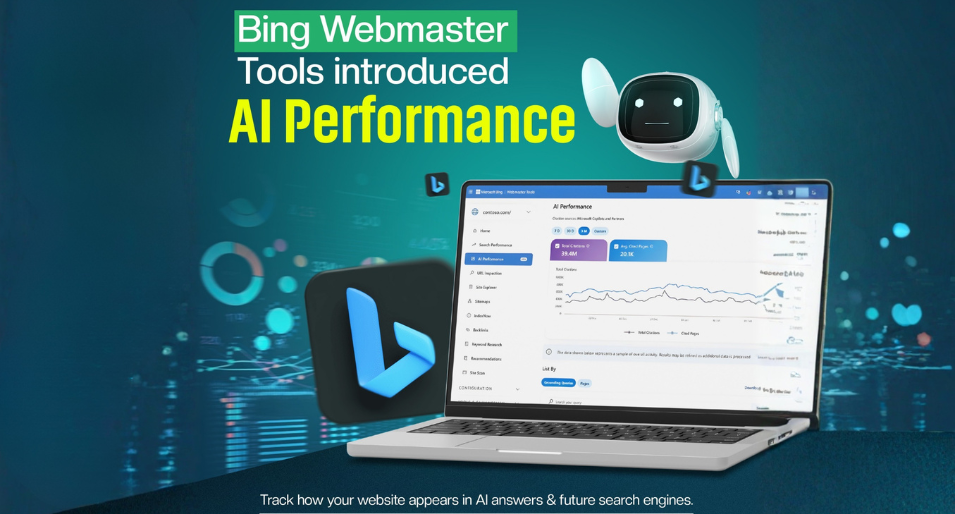
To support this transformation, Bing Webmaster Tools introduced the AI Performance report — a feature designed to help website owners understand how their content appears inside AI-generated answers, summaries, and chat results. This marks the beginning of a new optimization era known as Answer Engine Optimization (AEO).
What is Bing AI Performance?
Bing AI Performance tracks your website’s visibility within AI-generated responses rather than traditional rankings. Instead of only measuring impressions and clicks in SERPs, this tool analyzes how AI understands, cites, and recommends your content.
Key Metrics
- AI Impressions: How often AI references your content.
- AI Clicks: Traffic from AI answers.
- AI CTR: Engagement from AI citations.
- Page Attribution: Pages AI trusts.
- Query Context: Questions triggering your website.
- Trend Reporting: Growth or decline in AI visibility.
SEO vs AEO
SEO focuses on ranking webpages. AEO focuses on becoming the best answer. AI search selects trusted sources and summarizes them, making authority and clarity more important than keyword stuffing.
How to Optimize for AI
- Create question based content
- Add FAQ sections
- Use structured headings
- Provide clear concise answers
- Improve readability
- Build topical authority
- Implement schema markup
Why Businesses Must Adapt
As AI search grows, fewer users click traditional results. Websites not optimized for AI visibility will lose traffic even if they rank in search engines. Future traffic will come from recommendation engines rather than link listings.
Conclusion
SEO is evolving into AEO. The goal is not ranking — it is being selected as the answer.